Information access
What an intermediary intends to do shapes the OEM licence
- Author
- John Bright
- Published
- Reading time
- 4 min read
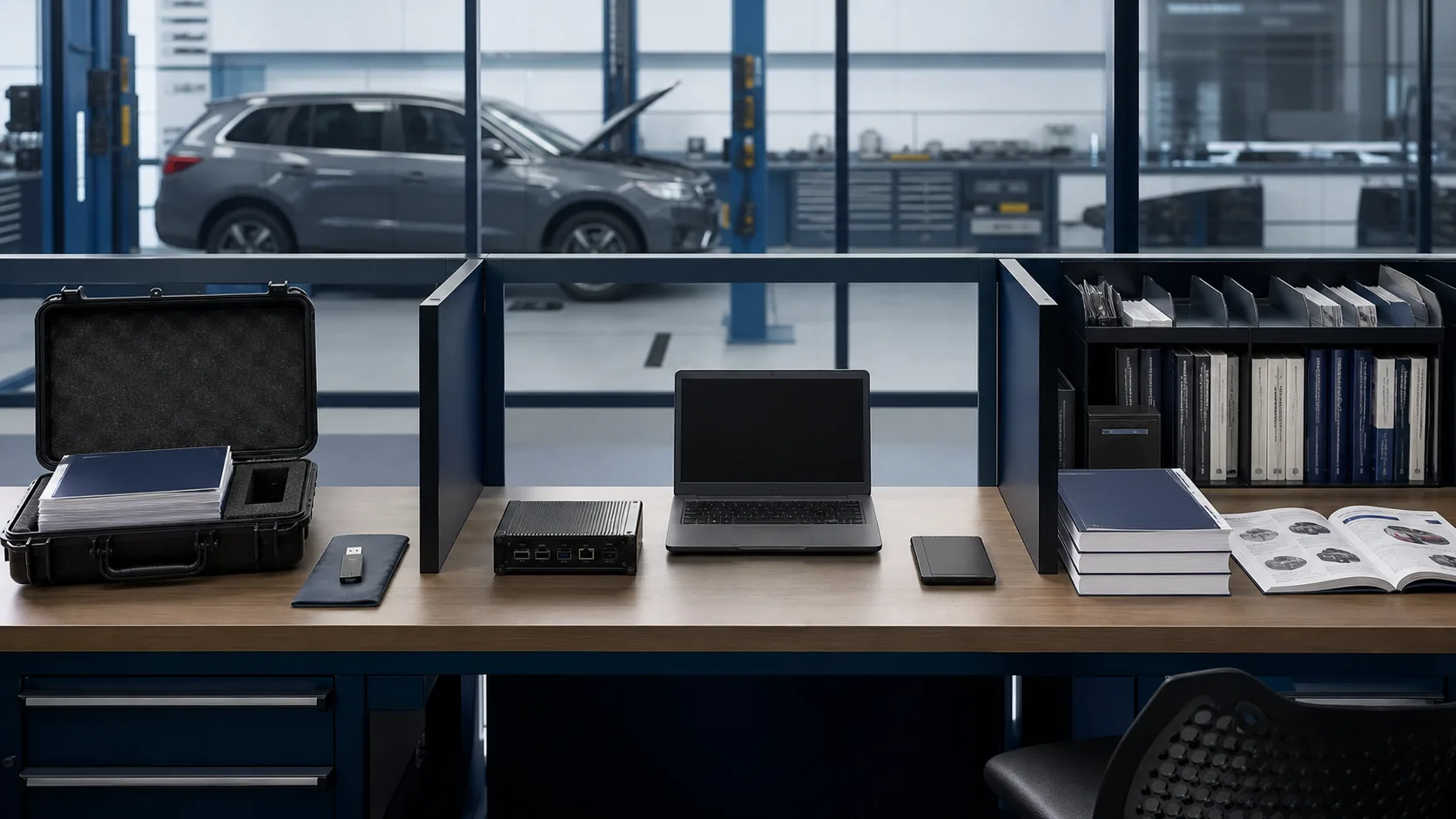
A technical-information publisher asks an OEM for repair and diagnostic information, regular updates and permission to incorporate the material into a multi-brand product.
The OEM needs to understand that product before it can define a useful licence. A portal subscription may let somebody read a repair procedure. The publisher may instead need structured files that it can integrate, update and present to workshop subscribers.
Start with the service the intermediary intends to provide. Its users, vehicle coverage and delivery method will help establish the information and permissions it needs.
Understand the service
“Intermediary” describes a range of businesses: technical-information publishers, data aggregators, diagnostic-tool manufacturers, remote-service providers and software platforms. One company may perform several of these functions.
For the publisher in the opening example, the OEM would need to know whether it supplies its own workshop portal, provides data to another software company, or does both. The intended recipients and territory matter, as do the processing and updates needed to keep the product useful.
Discuss the proposed service in enough detail to identify what the company will do with OEM information and what its customers will receive. That account is a better starting point for the licence than the company’s industry label.
Specify the source information
“All repair data” or “all diagnostic data” leaves too much unresolved. Identify the information categories, brands, models, variants and model years required, then establish where the authoritative information is held.
The publisher may need repair procedures and wiring diagrams from one system, vehicle identifiers from another and a separate update feed. A diagnostic product may need diagnostic or protocol data. Some functions may also depend on a live OEM system.
Recording those sources and dependencies lets the OEM check coverage and delivery before commercial terms are settled. It also exposes gaps that a general promise of access would leave hidden.
Agree how the information will be used
A publisher may need to structure, map, normalise and integrate OEM information into its product. It may translate terminology, connect content to vehicle identifiers, present it to subscribers and replace it when updates arrive. Supplying the files alone does not resolve the permissions for those activities.
Other services can involve multi-brand diagnostic databases, remote support, APIs, derived outputs or AI-assisted retrieval. The intended use should be described clearly enough for the parties to decide which rights and controls are required.
Follow the information through to its recipients. The immediate licensee may supply workshops directly or provide data to another platform. The licence should address that onward use or supply where it is proposed, including who may receive the information or resulting output.
Match delivery to the licensed service
For a publisher offering regularly updated repair information, delivery frequency and integration support can be as important as the initial dataset. Confirm the interface or file format, update process, technical support and any external provider dependencies.
These arrangements need to fit the agreed territory, brands, vehicles and users. If the licence permits a service that the delivery system cannot support, the parties have an implementation problem before the product goes live.
Depending on the service, the rights may need to cover receiving, using, normalising, integrating, updating, presenting and processing the information, together with agreed onward supply. Those rights are matters to address in the licence; they are not automatic entitlements.
Check the statutory position separately
Australia’s Motor Vehicle Information Scheme, in Part IVE of the Competition and Consumer Act 2010, provides statutory access rights to Australian repairers and scheme registered training organisations. It does not currently establish a general direct OEM-facing access right for organisations merely because they operate as intermediaries.
An intermediary may separately fall within another defined statutory role because of the activities it performs, but that is a question of the specific circumstances rather than a general intermediary rule. The Australian Government has also consulted on possible direct intermediary access through its 2026 right-to-repair discussion paper. Those proposals are not current law.
The OEM should obtain legal advice where the statutory position needs to be determined. It still needs a clear account of the proposed service, information, recipients and delivery to assess the commercial licence.
Other jurisdictions provide useful context. In ADPA and Gesamtverband Autoteile-Handel v Peugeot and PSA, Case C-390/21, the Court of Justice of the European Union read the access required under Article 61 of Regulation (EU) 2018/858 as including processing and use of repair and maintenance information for technical-information publishers’ aftermarket activities.
That is a European position in its own setting. It should not be assumed to produce the same result in Australia.
Bring a defined request to the licensing discussion
Before progressing the request, establish:
- The product or service the intermediary will provide.
- The specific OEM information, vehicles and markets it needs.
- How it will process and use that information.
- Who will receive the information, product or output, including through another provider.
- How delivery, updates and support will work.
- Which permissions and controls need agreement.
Commercial terms can then reflect the actual scope, service quantity, delivery work, support and rights involved. For the publisher, that means discussing a licence for the product it intends to run, with enough detail for both parties to understand what they are agreeing to supply and support.